
Policy Priorities / Sustainability & Circular Economy
Lead markets and demand-side measures
The current context
EU policy increasingly uses demand-side measures and lead market initiatives to support the uptake of sustainable products and circular solutions.
The cleaning products sector acknowledges the critical need for policy measures that will stimulate production and demand for bio-based feedstock. This transformation presents a clear opportunity to align industry practices with environmental objectives and the future competitiveness of the sector.
Nevertheless, our industry faces two principal constraints in scaling up the use of biobased feedstocks in product formulations: (a) the continued price difference (“green premium”) compared with conventional alternatives: (b) insufficient availability of suitable feedstocks at scale.
What is changing: sustainability and competitiveness agenda
Recent policy discussions position lead markets within the broader Clean Industrial Deal and competitiveness framework, focusing on scaling circular solutions, strengthening secondary raw materials markets, and aligning environmental objectives with industrial policy.
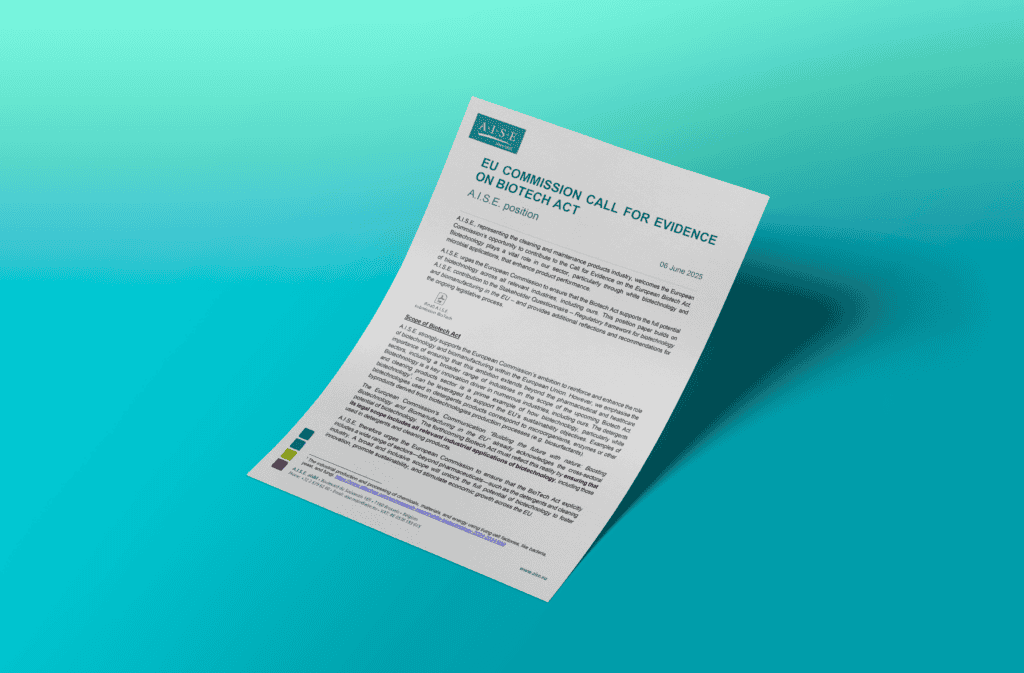
In this context, upcoming initiatives such as the Industrial Accelerator Act, the Circular Economy Act and the Biotech Act are expected to play a key role in unlocking investment, addressing market barriers and supporting the uptake of sustainable and bio-based solutions. These initiatives are particularly relevant for the cleaning products sector, where access to sustainable feedstocks and cost competitiveness remain key challenges.
Industry perspective and Detergents Europe’s work
From an industry perspective, lead market measures can support the transition towards more sustainable products, provided they:
- are coherent with existing legislation,
- remain proportionate and technology-neutral, and
- do not create additional financial & administrative burdens for downstream users.
Detergents Europe emphasises the importance of ensuring that demand-side measures are aligned with the broader regulatory framework and support both sustainability and Single Market functioning.
In this context, demand-side measures should support the uptake of innovations that deliver measurable sustainability benefits, including those linked to energy efficiency in product use, such as low-temperature washing initiatives.