
Policy Priorities
Sustainability & Circular Economy
Policy context
Sustainability and circularity are central to the European Union’s current policy agenda, with a strong focus on competitiveness, resource efficiency and industrial resilience. Recent initiatives aim to accelerate the transition towards a more circular and climate-neutral economy, while ensuring that European industry remains innovative and globally competitive.
This policy direction is reflected in a range of initiatives under the EU’s Clean Industrial Deal and competitiveness agenda, including:
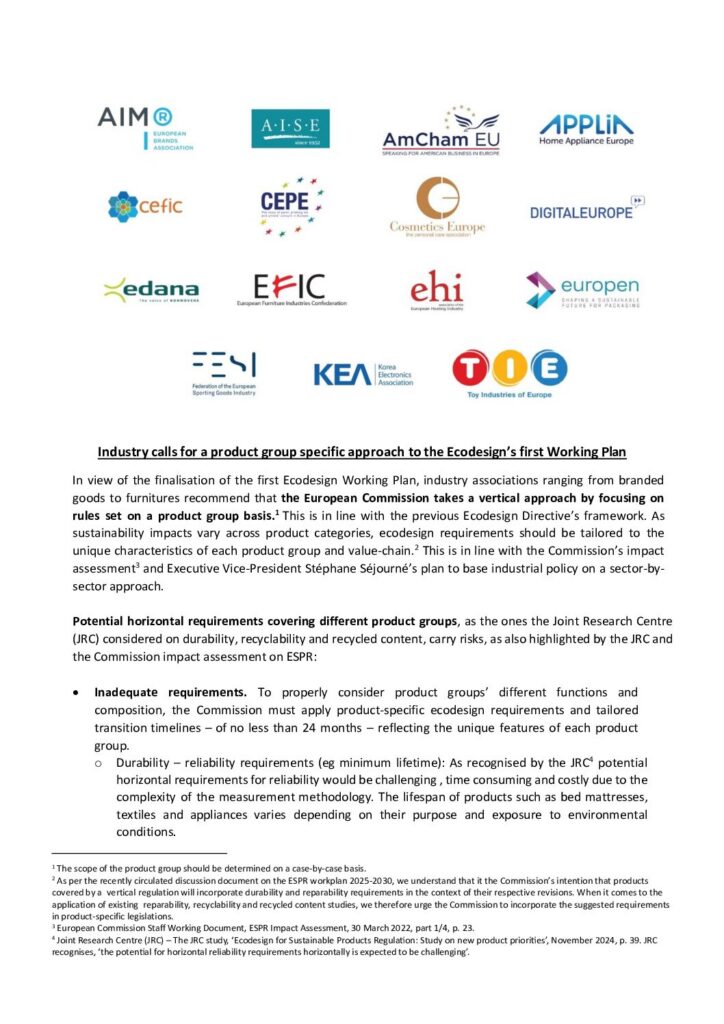
- the Ecodesign for Sustainable Products Regulation (ESPR),
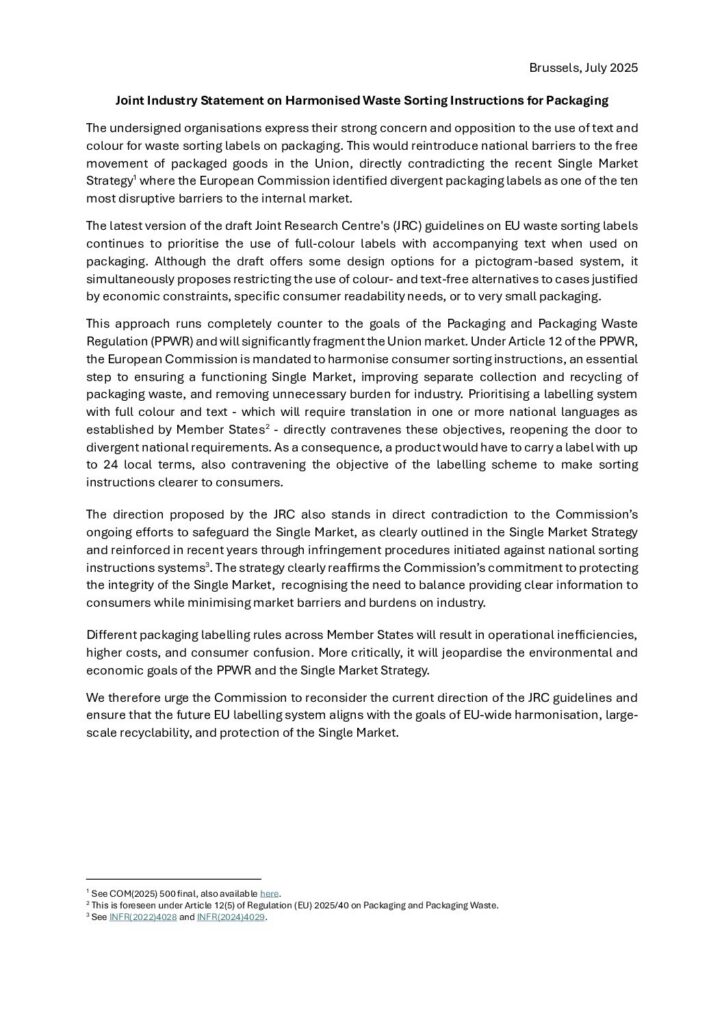
- the Packaging and Packaging Waste Regulation (PPWR),
- the development of circular economy and secondary raw materials markets, and
- the use of demand-side and lead market measures to support sustainable products.
Together, these initiatives aim to improve the environmental performance of products, strengthen circular value chains and ensure a more coherent and efficient Single Market.
This policy landscape is evolving further with upcoming legislative initiatives under the EU’s competitiveness and industrial policy agenda, including the Industrial Accelerator Act, the Circular Economy Act and the Biotech Act. These initiatives aim to support the scale-up of innovative technologies, strengthen circular value chains and promote access to sustainable and bio-based solutions across the Single Market.
The role of the cleaning and hygiene products industry
The cleaning and hygiene products industry has a long-standing commitment to driving sustainable production, product design and consumption patterns.
As a sector placing products on the market at scale, it plays a key role in enabling sustainability transitions through:
- the development of more efficient and resource-conscious formulations,
- improvements in product performance and use-phase impacts, and
- the promotion of more sustainable consumer behaviour.
This contribution is particularly important given the everyday nature of cleaning and hygiene products, where sustainability outcomes are strongly linked to how products are designed, used and disposed of. Sustainability policy is closely linked to the sector’s work on product safety, formulation and classification, including areas such as enzymes, liquid detergent capsules and hazard communication.
These elements are addressed in the Chemicals section and illustrate how sustainability and regulatory frameworks are interconnected in practice.
Detergents Europe’s role
Detergents Europe (formerly A.I.S.E.) contributes to sustainability and circular economy policy discussions by providing technical expertise, lifecycle insights and practical implementation experience.
The association engages with EU institutions and stakeholders on key legislative initiatives shaping the sector, including:
- ecodesign and product sustainability requirements,
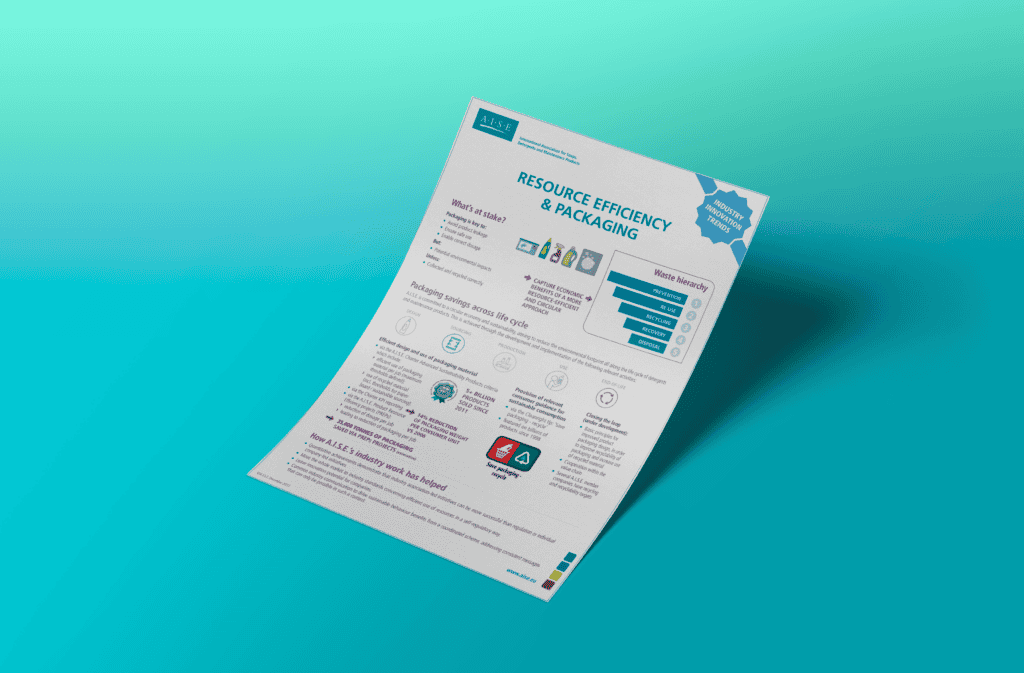
- packaging and waste legislation,
- sustainability labelling and environmental information, and
- circular economy and industrial policy measures.
This engagement focuses on ensuring that sustainability policies:
- are science-based and proportionate,
- are coherent across regulatory frameworks, and
- can be effectively implemented in practice across the Single Market.
Priorities for the sector
From an industry perspective, key priorities in the sustainability and circular economy area include:
- Embedding life-cycle thinking into policy frameworks
Ensuring that environmental impacts are assessed across the full product lifecycle, including production, use and end-of-life. This includes consideration of the use phase of products, which is a key driver of environmental impact for detergents and cleaning products and is closely linked to topics such as low-temperature washing and ingredient functionality, as described in the Chemicals section. - Ensuring coherence across EU legislation
Aligning ecodesign, packaging, chemicals and consumer information requirements to avoid overlaps and inconsistencies - Supporting circular and resilient value chains
Enabling access to secondary and bio-based raw materials, improving market conditions for circular solutions, and facilitating the scale-up of innovative technologies in line with upcoming EU initiatives such as the Circular Economy Act and the Biotech Act - Promoting innovation and competitiveness
Ensuring that sustainability policies support investment, technological progress and the competitiveness of EU industry - Enabling informed consumer choices
Supporting clear, reliable and science-based environmental information to guide sustainable consumption
Strategic relevance for the sector
For the detergents and cleaning products industry, sustainability and circular economy policies are closely linked to both environmental objectives and industrial performance.
Well-designed policy frameworks can:
- support the transition to more sustainable products,
- facilitate the uptake of circular solutions across value chains, and
- contribute to a strong and competitive European manufacturing base.
Detergents Europe therefore supports a policy approach that combines environmental ambition with operational feasibility, ensuring that sustainability measures deliver tangible benefits while remaining workable for industry and consumers.