Policy Priorities
Public Health & Hygiene
Public health and hygiene are long-standing priorities of the European Union. They are central to protecting human health, preventing the spread of infectious diseases and ensuring safe living, working and public environments across Europe.
EU policymakers address hygiene and infection prevention through public health, chemicals and product-related legislation. These frameworks aim to enable access to essential hygiene products that are used every day across Europe, whilst ensuring a high level of protection for people and the environment.
In recent years, hygiene has gained renewed policy attention in the context of health preparedness, resilience and quality of life. Cleaning and hygiene practices are increasingly recognised as part of the infrastructure that supports healthcare systems, food safety, mobility and the continuity of essential services.
Where our products work
The cleaning and hygiene products industry plays a central role in delivering these objectives in practice. Its portfolio includes detergents and cleaning products, as well as disinfectants, insecticides and repellents. These products are used daily by people at home, in hospitals, food production, public transport and many other environments where hygiene, infection prevention and the control of pests and vectors are critical.
Homes
Hygiene, infection prevention and the control of pests and vectors in everyday domestic environments.
Hospitals
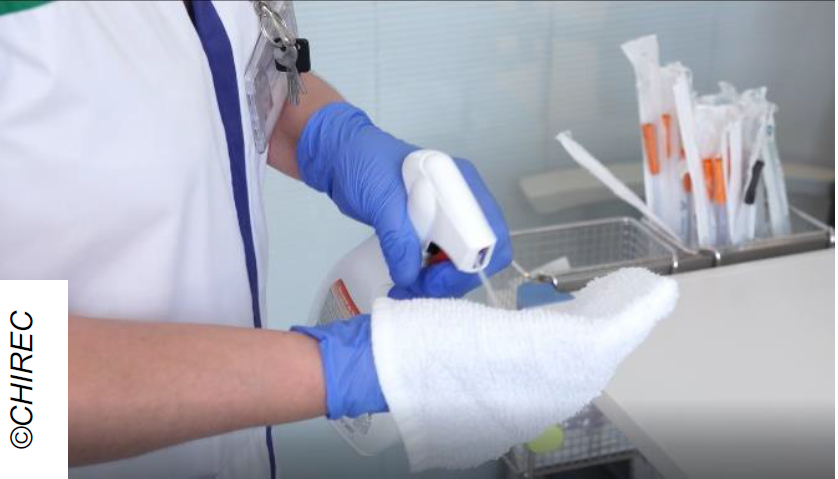
Critical hygiene and infection prevention in healthcare settings.
Food production
Cleaning, disinfection and pest/vector control across the food chain.
Public transport
Maintaining hygiene where many people share the same environments.
Detergents Europe at EU level
Detergents Europe represents this industry at EU level. It contributes technical, scientific and practical expertise to policy discussions related to public health and hygiene, supports evidence-based policymaking, and facilitates dialogue between the sector and EU institutions.
From a sector perspective, public health policy is closely linked to ensuring continuous access to products essential to public health and hygiene, supporting preparedness and resilience, maintaining high safety standards, applying proportionate and science-based regulation, and enabling innovation.
Biocidal Products Regulation (BPR) evaluation
Reflecting on a key framework that enables the supply of disinfectants needed for public health protection.
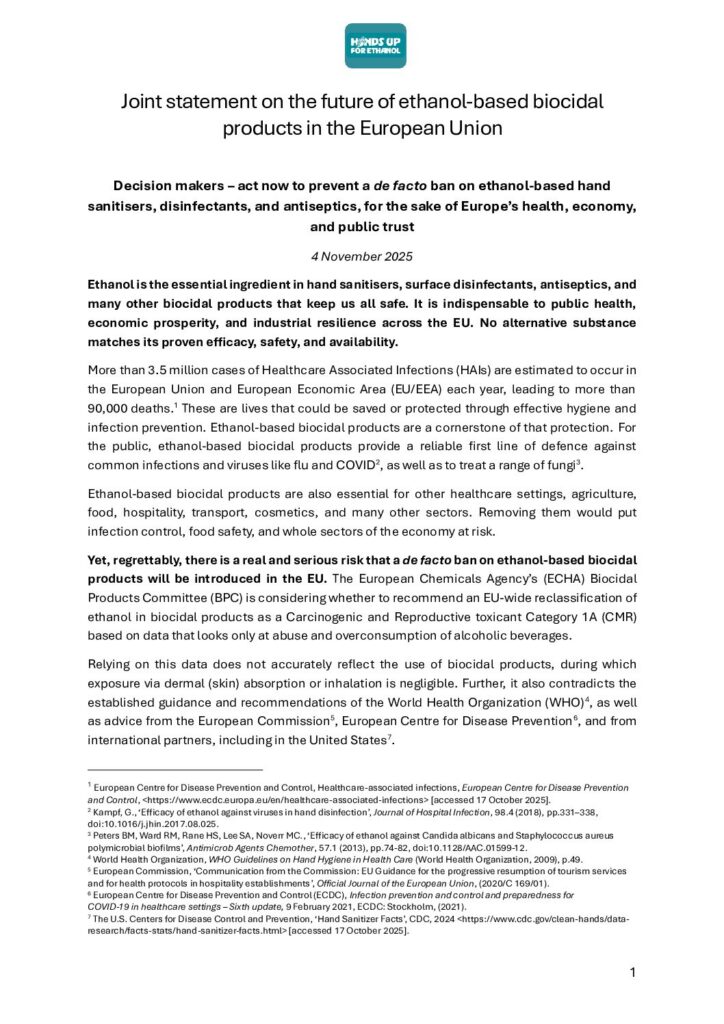
Ethanol classification
An ingredient indispensable to infection prevention - currently the subject of EU classification discussions.