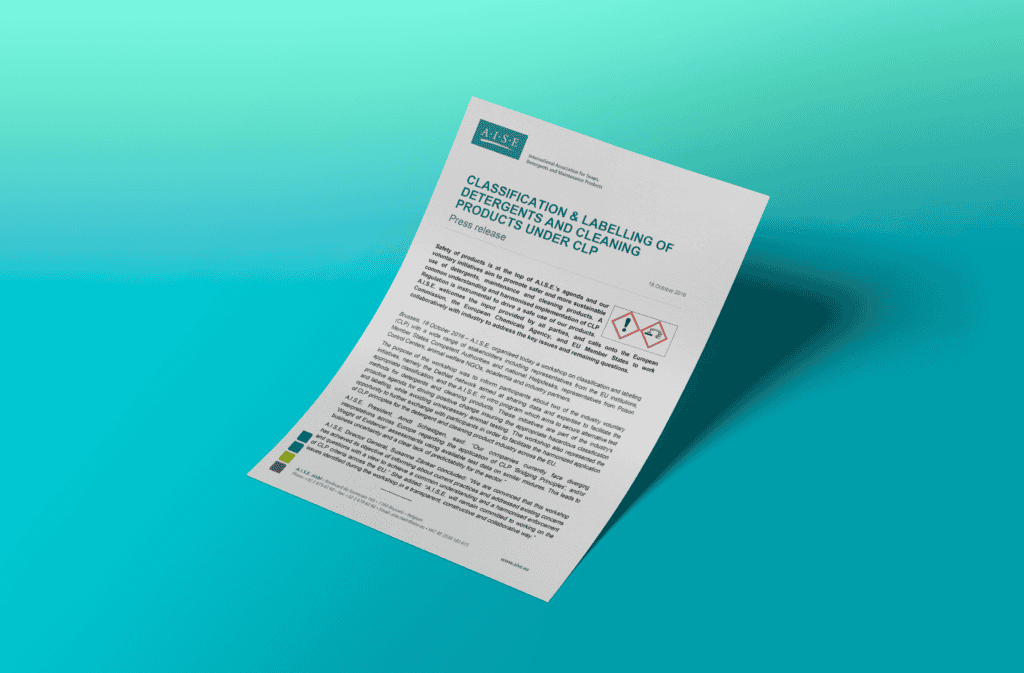

Policy Priorities / chemicals policy
Classification, Labelling and Packaging (CLP)
How CLP works today
The Classification, Labelling and Packaging (CLP) Regulation (EC) No 1272/2008 establishes how chemical substances and mixtures are classified and how relevant hazard information is communicated through labels and packaging. It applies to all chemicals placed on the EU market, including consumer and professional products in the cleaning and hygiene sector.
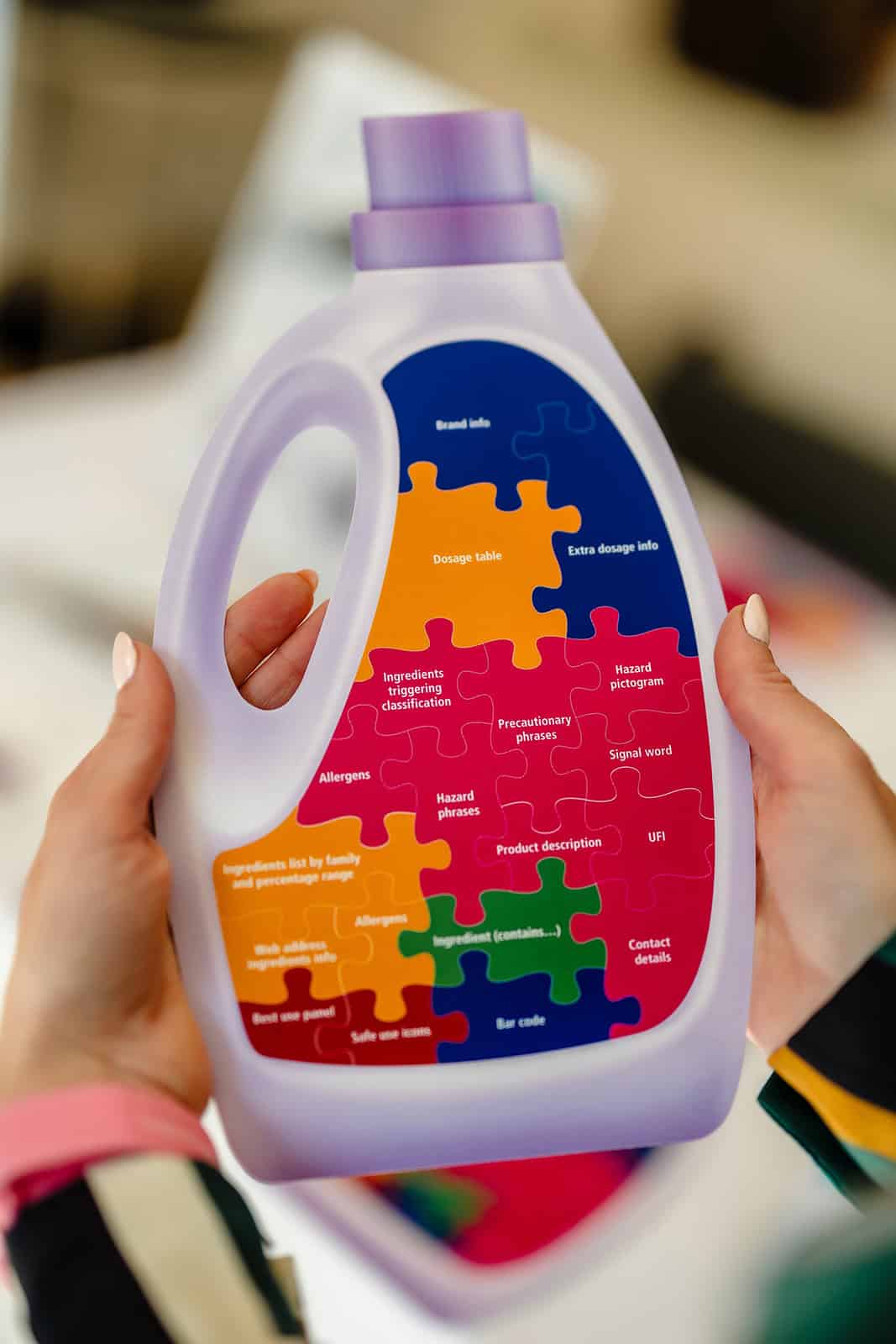
Key CLP elements particularly relevant to the sector include formatting requirements, the Unique Formula Identifier (UFI) used by poison centres, child-resistant fastenings (CRF), tactile warnings of danger (TWD), and obligations related to the online sale and advertising of chemicals.
What is changing: revised CLP framework and the Chemicals Omnibus
A revision of the CLP Regulation was adopted in 2024 and introduces new requirements on label formatting such as minimum font sizes, fold-out and digital labels, refill stations, and hazard information in advertising and online sales.
As part of the broader Chemicals Omnibus, the co-legislators have reached a provisional agreement targeting adjustments to the CLP implementation, including some rules’ simplification, while at then end of 2025 a stop-the-clock mechanism allowed realistic timelines for adapting labels and packaging. Detergents Europe has actively supported this approach as a pragmatic way to ensure implementation remains workable while maintaining a high level of protection for human health and the environment.
Industry perspective and Detergents Europe’s work
Detergents Europe has actively engaged throughout the CLP revision and the Chemical Omnibus process, and continues to support implementation through technical input, evidence on practical impacts and guidance to support compliance. This includes work on UFI readability, label formatting, advertising requirements, small packaging and realistic transition timelines.
From an industry perspective, effective implementation of the CLP Regulation should preserve the preventive value of labels and packaging, avoid information overload, and remain coherent with other EU legislation, including packaging, sustainability and consumer information rules.